Greiner Buildings
+400 monthly organic visits from strategic blog content
Built topical authority in post-frame construction and earned organic traffic that compounds without ad spend.
SEO & content by Gridwork.
Read the case study →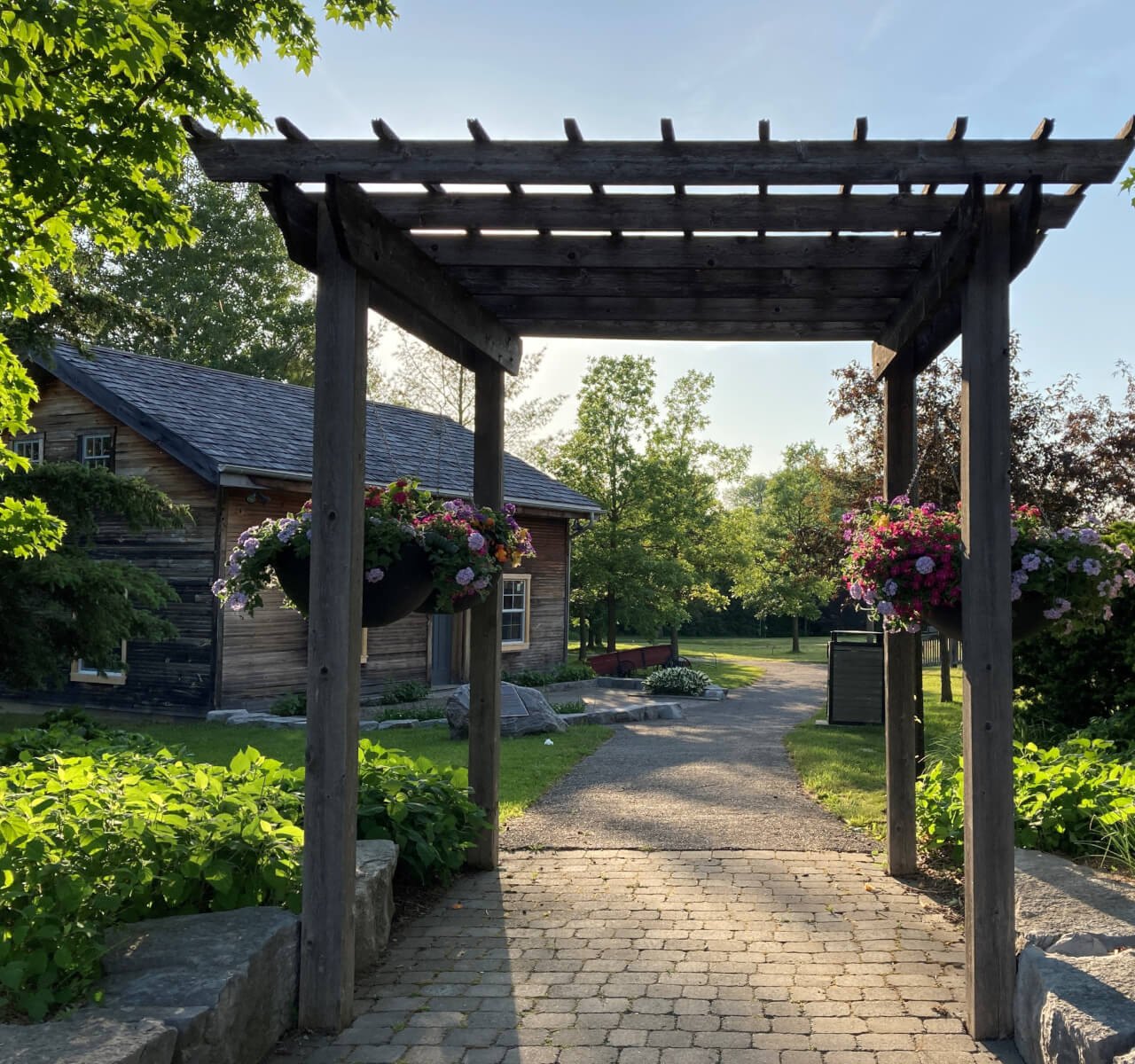
More leads is the wrong goal. The landscapers who make money are the ones whose customers live on the same streets, and that is something search can actually be aimed at.
16 months, two clients
Average Google position over 16 months, Creek Engineering
Keywords ranking at number one for a single client
Clicks in 28 days against the 28 before, AshevillePros.com
Neither of those is a landscaping company, and I don't have one on the books right now. I'm not going to dress an adjacent client up as one. What carries over between trades is the method, not the keyword set.
See the resultsThe map pack
Most people never scroll past them. Which three is not luck, and it is not the biggest company — it is whoever has done this work.
Every landscaping marketing page sells the same thing: more leads. It is the wrong number to optimize.
Twelve lawns on one street is a profitable morning. One truck, one trailer unload, no windshield time between stops. Twelve lawns scattered across the county is the same twelve invoices and a completely different business, one where half the day is spent driving and the crew is paid for all of it.
That is the trap this trade falls into. The phone rings more, the schedule fills, revenue goes up, and the margin quietly goes the other way. It looks like growth right up until somebody works out what an hour of drive time actually costs.
Route density is the whole game, and it is something search can be aimed at.Most landscapers market to a city. A city is far too big a target for a business whose economics are decided by how close the next stop is.
The fix is to build for areas smaller than a city. Named subdivisions, neighborhoods, the school district everyone in town uses as shorthand, the road that separates two halves of a suburb. These are the units homeowners actually use when they describe where they live, and they are units almost nobody builds pages for.
This is the same discipline as building location pages properly, one market at a time, which is laid out in how location pages work for contractors.
About 19,000 searches a month
Most landscaping companies sell both, out of the same truck, under one brand. In search they behave nothing alike, and the keyword data is unambiguous about it.
| Maintenance, "lawn care" | Design-build, "landscaping" | |
|---|---|---|
| The revenue | Recurring, contracted, predictable. The base the business stands on | One-time projects, several times the ticket, lumpy across the year |
| How it gets decided | Quickly, close to home, off the map pack and a review count | Weeks of looking at photographs, gathering ideas, getting quotes |
| What wins it | Proximity, Google Business Profile, neighborhood-level pages | Real project photography and content published seasons ahead |
| What good looks like | A tighter route, not a bigger one | Fewer, larger jobs booked further out |
A site that blurs the two ranks convincingly for neither. The maintenance pages get buried under design language, and the design work never gets the photographs and depth it needs to be chosen.
Nobody wakes up in April and decides to spend twenty thousand dollars on a backyard that afternoon. They spend the winter looking at pictures.
That is when the work is actually won, and it is why design-build content published in autumn fills a spring calendar. Patios, retaining walls, outdoor kitchens, plantings, irrigation, lighting: each one is a decision made slowly by someone gathering ideas long before they call anyone.
Plant selection is the piece most worth writing about locally, because it is the piece that genuinely changes from place to place. TheUSDA Plant Hardiness Zone Map, updated in 2023 and shifting for much of the country, decides what survives in your market. A landscaper writing about what actually thrives on their side of the county is writing something no national page can copy.
The phases below are the same for every contractor I work with. What changes for landscaping is the emphasis: geography built at neighborhood scale rather than city scale, a hard separation between the maintenance and design-build sides of the site, and real project photography, which matters more here than in any other trade I work in.
Revenue climbs and the margin does not follow it. Usually that is drive time, and it is a marketing problem before it is an operations one.
Crews criss-cross the county because the leads arrived scattered. Nobody aimed at where they came from.
The projects you are proudest of are the ones your website says least about, usually for want of photographs.
Property managers search in a vocabulary your site never uses, on a contract cycle, with almost nobody competing.
FAQs
Target smaller areas than feels natural. Most landscapers optimize for a city, get calls from every corner of it, and end up with a schedule that looks full and pays badly. Pages built around the neighborhoods and subdivisions you already serve bring in the customers who sit next to the ones you have. Fewer calls, better calls.
No, and treating them as one business is the most common mistake in this trade. They use different words, attract different customers, and get decided on different timelines. Maintenance is a local pack and route problem. Design-build is a research problem that gets won with photographs and content published months ahead of the job.
It can soften it, mostly by moving the work you already win earlier. Homeowners plan spring projects in January and February, so the design-build content published in autumn is what fills the spring calendar. It will not turn December into July, and anyone telling you otherwise is selling something.
Often, and it is thin ground competitively. Property managers and HOA boards search in a completely different vocabulary from homeowners, on a contract cycle rather than an impulse. That work is recurring, route-friendly by nature because it is one large property, and almost nobody writes for it.
Six to nine months for meaningful ranking movement. Local pack work can move sooner. The design-build content takes longest and pays most, because you are publishing ahead of a decision the homeowner has not started making yet.
The Momentum System is $2,000 a month, month to month, with no setup fee. Multi-crew operations, heavy commercial or HOA contract work, or a build that needs a new site alongside the SEO start at $3,500 and are scoped per engagement.
No. Month to month. The site, the content and the Google Business Profile history are yours, and they stay yours if we stop.
I do. No account manager, no junior staff, and never more than ten clients at a time.
Reviews

Mike Regina
Global Post Auditing Solutions · 2 years ago
Working with John Ragon was a game-changer for our website. His expertise in SEO resulted in significant traffic increases, and we began receiving calls that were previously non-existent. His approach was professional and effective, making a marked difference in our online presence. Our experience was nothing short of outstanding.
Erik Colleen
VP, Creek Engineering · Client testimonial
John cares more about why you are in business than what you are in business for. He encapsulates the specialty ‘why?’ behind your operation and presents it to the world in a professional and attractive manner. If you are looking for someone who can help make sense of your beautiful mess and take the presentation to the next level, Gridwork Marketing is the firm to handle it.
Luke Ritter
2 years ago
John is excellent at what he does, he helped me with two of my businesses. Great design work which gave me a nice professional presence. Highly recommend!
The Gridwork Momentum System
Rankings are a byproduct of doing the work in order. This is where this service fits, and why the timeline looks the way it does.
Results
Built topical authority in post-frame construction and earned organic traffic that compounds without ad spend.
SEO & content by Gridwork.
Read the case study →A review generation system plus local SEO took a summer camp from invisible to dominant in local search.
Content & SEO by Gridwork. Site designed and built by Openbox9.
Read the case study →Started with no digital presence under a previous brand name. A full rebrand, new site, and weekly content moved average Google position from 41 to 11, with 52 keywords in the top three.
Design, build, brand, strategy & weekly content by Gridwork.
Read the case study →Pricing
Most agencies sell three tiers so the middle one looks reasonable. There's one here.
$2,000/month
Month to month · Cancel anytime
For contractors and engineering firms with complex needs, multi-location operations, competitive markets, commercial work, or a business that needs web design and SEO built together from scratch.
Every custom engagement starts with a full strategy conversation. We scope the work to match your market, your growth targets, and where you are today.
Free Resources
Written for contractors, not marketers. No email required.

A competitor from 40 miles away is outranking you in your own city because they built a page for it. Here is how location pages work and how to fix it.
Read the guide →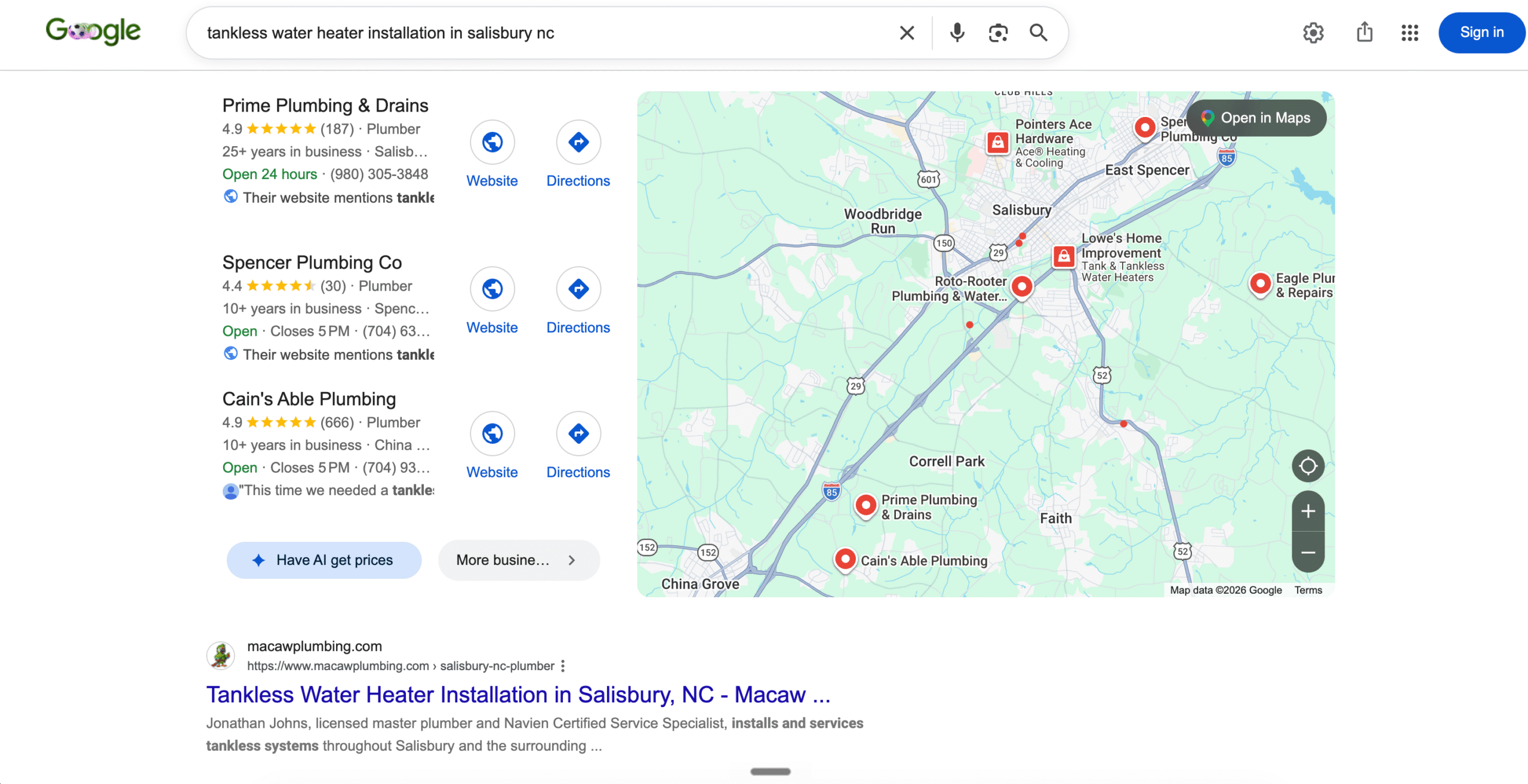
A service area plumbing company went from ranking only in their home town to #1 in Salisbury, NC in four months. Here's what made their city pages actually work.
Read the guide →
SEO takes six months, but not for vague reasons. Here’s exactly what happens in months one, two, three, and beyond, and when to expect calls.
Read the guide →Related Services
The Google Business Profile and map pack work that decides the maintenance side.
See the service →The full Momentum System: technical foundation, content engine, local authority.
See the service →A landscaping site built to show the work properly and convert the visitor who sees it.
See the service →